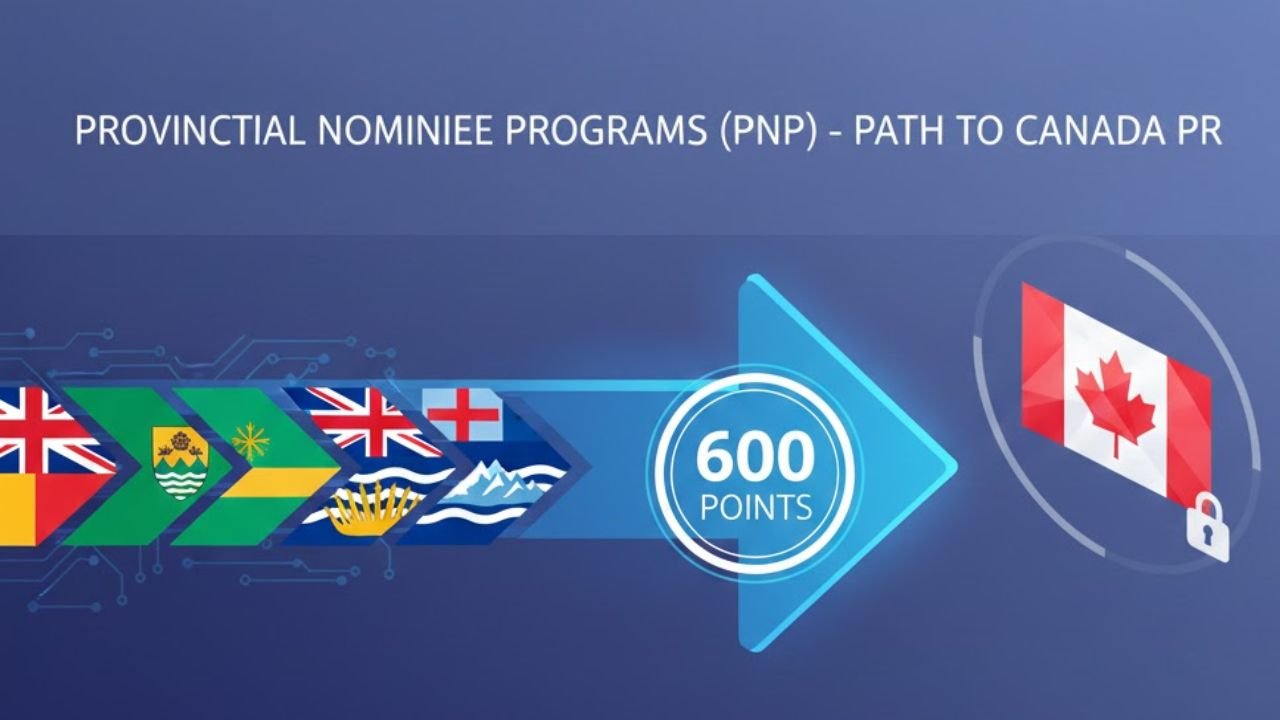

Complete Guide to the Canada ECA Process: Step-by-Step for Express Entry
Canada ECA process is a mandatory rite of passage for nearly every Express Entry candidate, ensuring your foreign education is recognized and accurately scored. For any skilled professional seeking Canadian Permanent Residence (PR) via the Federal Skilled Worker Program (FSWP), proving your academic credentials is non-negotiable. Without an Educational Credential Assessment (ECA), your degree, diploma, or certificate simply does not exist in the eyes of Immigration, Refugees and Citizenship Canada (IRCC).
The ECA is the official report that verifies your foreign educational credential is valid and equivalent to a Canadian one. It is the gatekeeper to claiming precious points on the Comprehensive Ranking System (CRS). Crucially, delays in the Canada ECA process are one of the most common causes of stress and missed opportunities for applicants. This comprehensive, 2000-2500 word guide provides a definitive, step-by-step roadmap for choosing the right organization, submitting the correct documentation, and navigating the assessment efficiently to ensure you claim every point your education deserves.
Disclaimer
The information provided in this guide on the Canada ECA process outlines the general steps required by designated organizations. Processing times and document requirements are set by the individual assessment bodies (e.g., WES, ICAS) and are subject to change without notice.
1. Do You Need an Education Credential Assessment (ECA)?
The short answer is: yes, almost certainly.
The ECA is primarily required for two reasons within the Express Entry system:
-
Mandatory Eligibility (FSWP): If you are applying through the Federal Skilled Worker Program (FSWP), you must have an ECA for your highest credential to meet the minimum eligibility criteria for the program itself.
-
CRS Points Claim: To claim any points at all for your education in the Comprehensive Ranking System (CRS) calculation, you and your spouse (if claiming their points) must provide an ECA report. If you apply without an ECA, your education score will be zero, severely limiting your chances of receiving an Invitation to Apply (ITA).
The ECA is valid for five years from the date it was issued.
2. Choosing Your Designated Organization
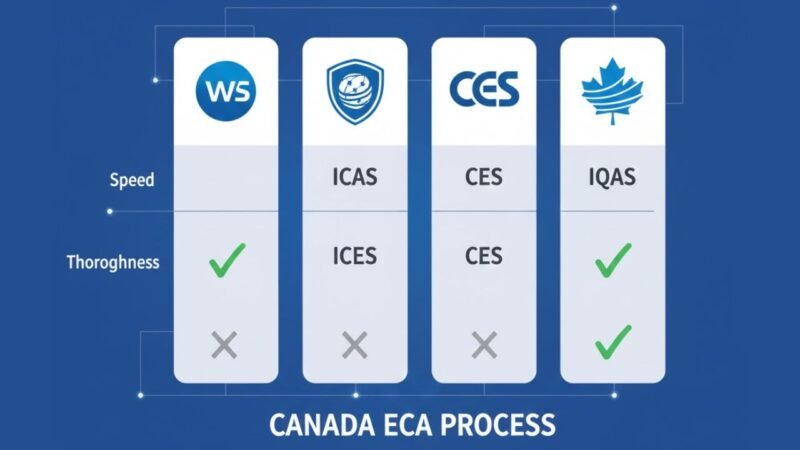
IRCC has authorized several organizations to conduct assessments for immigration purposes. Your choice depends primarily on your profession and whether you require a general assessment or one for professional licensing.
A. General Purpose Assessments
For most Express Entry candidates, the general assessment bodies are used to confirm the academic equivalency of a degree for immigration points.
| Organization | Key Feature | Best For |
| World Education Services (WES) | Fastest processing times; high volume of applications. | Most applicants; those in a hurry to create an Express Entry profile. WES is widely accepted by most Provincial Nominee Programs (PNP). |
| International Credential Assessment Service of Canada (ICAS) | Highly thorough and well-regarded for professional designations. | Candidates who may later need their assessment for professional bodies. |
| Comparative Education Service (CES) | Based at the University of Toronto. | Those who prefer a university-based assessment body. |
| International Qualifications Assessment Service (IQAS) | Province of Alberta-based service. | Applicants targeting Alberta or the Prairie Provinces. |
| International Credential Evaluation Service (ICES) | Based at the British Columbia Institute of Technology (BCIT). | Applicants targeting British Columbia. |
B. Regulated Professions Assessments
If you are a doctor or pharmacist, your assessment must be done by the corresponding professional body, which is simultaneously recognized for the ECA requirement:
-
Physicians (Doctors): Medical Council of Canada (MCC)
-
Pharmacists: Pharmacy Examining Board of Canada (PEBC)
Why WES is the Go-To for Immigrants:
WES generally processes the highest volume of applications and has the most streamlined digital interface for managing documents. For the average Sri Lankan professional who is focused solely on maximizing their CRS score and quickly entering the Express Entry pool, WES is often the recommended choice due to its typical speed and familiarity with international academic systems.
3. Step-by-Step Guide to the Canada ECA Process (Focus on WES)
The Canada ECA process relies heavily on the secure and direct submission of documents. Following these steps precisely will prevent months of delay:
Step 1: Create an Online Account
Go to the website of your chosen organization (e.g., WES) and create an account. You will be assigned a unique Reference Number. This number must appear on every single document you submit and every envelope sent by your university.
Step 2: Pay the Fee and List Credentials
Pay the required fee online. Then, accurately list every educational credential you wish to have assessed, starting from the highest degree earned.
Step 3: Check Document Requirements (The Critical Delay Point)
This is the most critical step in the Canada ECA process. You must find the specific document requirements for your country and institution. The vast majority of delays occur here because the document submission must adhere to a core rule:
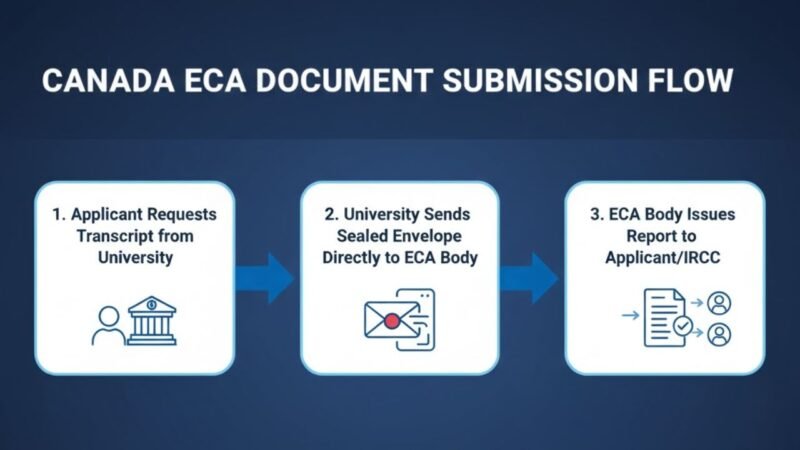
Official transcripts must be sent directly from the issuing university or affiliated examining body (e.g., University of London, if applicable) to the ECA body.
They must be in an envelope that is sealed, signed, or stamped across the flap by the university registrar or controller of examinations. If the seal is broken, the documents will be rejected.
Step 4: Request Documents from Your Institution
You cannot send your transcripts yourself. You must formally request your university to:
-
Prepare your academic transcripts and degree certificate copies.
-
Place them in a single envelope.
-
Seal the envelope and sign/stamp the seal.
-
Mail the sealed envelope directly to the ECA organization (e.g., WES) using your unique Reference Number.
Step 5: Mail Supporting Documents (If Applicable)
Some ECA bodies, including WES, may allow you to mail copies of your final degree certificate and translated documents yourself, provided they are properly notarized. Always check the required mailing address and format for submission.
Step 6: Wait for the Assessment
Once all documents are received and verified as authentic, the assessment body begins processing. WES typically quotes a turnaround time of 30 business days after all documents are received and accepted. Upon completion, the final ECA report is posted to your online account and sent to IRCC.
4. Avoiding Common Pitfalls in the Canada ECA Process
Achieving a successful and timely ECA depends on avoiding these common mistakes:
-
Broken Seal or Applicant Submission: The single biggest error is applicants opening the envelope sent by their university or trying to mail the sealed transcripts themselves. The envelope must remain sealed and must be shipped directly from the school or examination board.
-
Mismatched Names: Ensure the name on your ECA application precisely matches the name on your passport and the name on your academic records. If your name has changed, you must include a notarized copy of your official name change document (e.g., marriage certificate, deed poll).
-
Incomplete Credentials: If you assess only your Bachelor’s degree, you will only receive points for that credential. If you have a two-year post-graduate diploma, assessing both can lead to higher points under the “Two or more post-secondary credentials” category in the CRS Skill Transferability Factors.
-
Using ECA for Licensure: Remember, the ECA is for immigration purposes only. It does not grant you the right to practice a regulated profession (e.g., law, engineering) in Canada. That requires separate, often lengthy, provincial licensing procedures.
Conclusion
The Canada ECA process is the mandatory bridge between your academic achievements overseas and your calculated value in the Canadian immigration system. By understanding the critical role of WES (or your chosen provider) and meticulously following the document submission rules—specifically ensuring transcripts are sent directly from the issuing institution—you can navigate this early phase efficiently and unlock the significant points your foreign education adds to your CRS score. Starting the ECA early is the key to minimizing processing delays and ensuring your Express Entry profile is ready to launch.
External Resources:
Internal Resources:
-
Mastering Your Canada CRS score calculation: The Ultimate Guide to Maximizing Points
-
Top Provincial Nominee Programs (PNP) for Sri Lankans
The following video further explains the role of different assessment bodies in the ECA process: WES vs ICAS vs CES vs IQAS vs ICES: Which ECA is Best for Canada PR?.





news via inbox
Nulla turp dis cursus. Integer liberos euismod pretium faucibua