Mastering Your Canada CRS Score Calculation: The Ultimate Guide to Maximizing Points
Mastering Your Canada CRS Score Calculation: The Ultimate Guide to Maximizing Points
Canada CRS score calculation is the fundamental first step in your journey toward Canadian permanent residency via the Express Entry system. In the intensely competitive world of Canadian economic immigration, the Comprehensive Ranking System (CRS) score is the digital gatekeeper that determines who receives an Invitation to Apply (ITA). It is not simply a numerical value; it is a meticulously weighted measure of your potential to succeed economically in Canada.
For years, the magic number has hovered high, emphasizing the need for strategic planning, especially for applicants without prior Canadian experience. With Canada refining its immigration strategy, understanding precisely how your Canada CRS score calculation is derived—and more importantly, how you can improve it—is the most critical action you can take. This comprehensive, 2000-2500 word guide provides a definitive breakdown of every point factor, unveils the key leverage points, and outlines the strategies needed to move your profile from the general pool to the top of the draw list.
Disclaimer
The information provided in this article on the Canada CRS score calculation is based on the current Immigration, Refugees and Citizenship Canada (IRCC) guidelines and is for informational purposes only. CRS criteria and point allocations are subject to change by IRCC.
What is the Comprehensive Ranking System (CRS)?
The Comprehensive Ranking System (CRS) is a points-based system used by Immigration, Refugees and Citizenship Canada (IRCC) to assess and score candidates in the Express Entry pool. It assigns a score out of a maximum of 1,200 points based on data provided in your Express Entry profile.
The system is designed to favor candidates who possess characteristics that have been statistically linked to long-term economic success in Canada. Once you enter the pool, your CRS score determines your rank. During Express Entry draws, IRCC invites candidates above a specific cutoff score to apply for Permanent Residence (PR).
The 1,200 available points are categorized into four distinct sections:
-
Core Human Capital Factors (Max. 500/460 points): Your individual characteristics (age, education, language, experience).
-
Spousal/Partner Factors (Max. 40 points): Points awarded for your partner’s characteristics, if applicable.
-
Skill Transferability Factors (Max. 100 points): Points for specific combinations of human capital that increase success potential (e.g., strong language + foreign work).
-
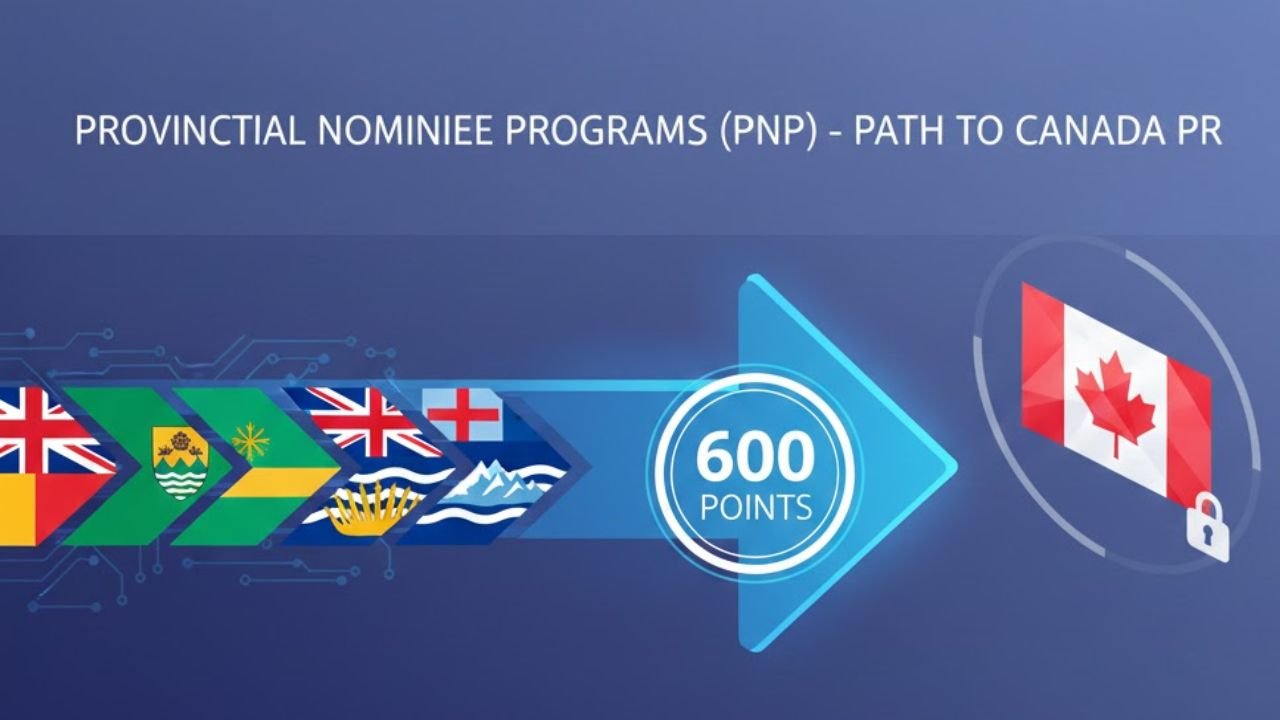
Additional Points (Max. 600 points): Points awarded for a Provincial Nomination, job offer, or Canadian education.
Understanding these categories is the key to mastering your Canada CRS score calculation.
Section I: The Foundation—Core Human Capital Factors
This section forms the bedrock of your score, accounting for the first 600 points (500 maximum if applying without a spouse, 460 maximum if applying with a spouse). It is the most challenging section to improve quickly, as the factors are based on past achievements or unchangeable attributes like age.
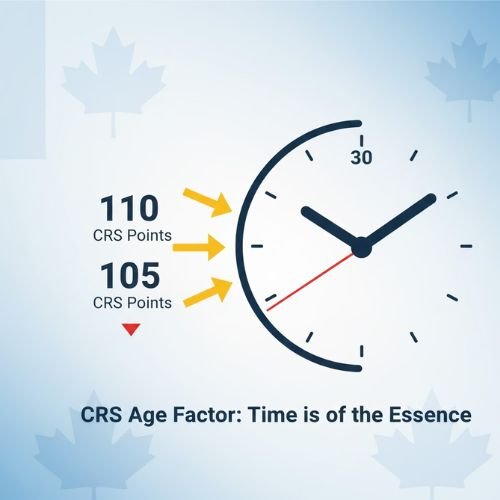
1. Age (Max. 110/100 Points)
Age is the most time-sensitive factor. Points are awarded generously up to the age of 29, after which the points begin to decline steeply.
-
Peak Points: Applicants aged 20-29 receive the maximum points.
-
The Drop: Points begin to decrease starting at age 30, with a significant drop each year thereafter.
-
Strategy: For older applicants, there is immense pressure to compensate for lost age points by maximizing scores in other categories, especially language and skill transferability.
2. Education (Max. 150 Points)
Your education must be assessed by an approved body, most commonly World Education Services (WES), via an Education Credential Assessment (ECA) to prove its equivalency to a Canadian qualification.
-
Maximum Score: Doctoral (Ph.D.) degree.
-
High Value: Master’s degree or professional degree needed for licensed practice.
-
Strategy: If you have multiple degrees, ensure all are assessed, as combinations (e.g., two or more post-secondary credentials) can award more points than a single credential.
3. Official Language Proficiency (Max. 136 Points)
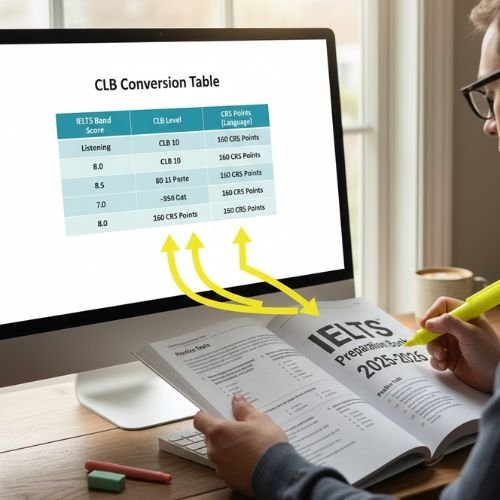
This is arguably the most controllable and highest-impact factor within the core human capital section. Your score is based on the Canadian Language Benchmark (CLB) level achieved in an approved test (IELTS, CELPIP for English; TEF, TCF for French).
-
CLB 9 (The Magic Number): Achieving a CLB 9 in all four abilities (Listening, Speaking, Reading, Writing) provides the maximum possible points for language and, critically, unlocks the highest Skill Transferability points. This generally corresponds to IELTS scores of 7.0 in all skills, except Reading, which must be 8.0.
-
Second Official Language: Testing in a second language (French or English) can provide up to an extra 24 points here.
-
Strategy: Do not apply until you have maximized your language score. Re-taking the IELTS or CELPIP test to move from a CLB 8 to a CLB 9 can be worth dozens of points and is often the difference between receiving an ITA and remaining in the pool.
4. Canadian Work Experience (Max. 80 Points)
Points are awarded for Canadian skilled work experience (NOC TEER 0, 1, 2, or 3).
-
Maximum Score: 5 years or more of Canadian work experience.
-
The CEC Advantage: Individuals with as little as one year of Canadian work experience are eligible for the Canadian Experience Class (CEC) and receive a significant boost in this section.
-
Strategy: For applicants without Canadian experience, this score is 0. Compensating for this zero requires maximizing every other available point.
Section II: The Spousal Factor (Max. 40 Points)
If you are applying with a spouse or common-law partner, your total maximum human capital points are reduced to 460, and your spouse’s characteristics contribute a maximum of 40 points to the total score. The key is to ensure your spouse’s profile adds value rather than detracts.
| Factor | Maximum Points |
| Spouse’s Language Proficiency (CLB 7+) | 20 Points |
| Spouse’s Education (ECA needed) | 10 Points |
| Spouse’s Canadian Work Experience | 10 Points |
Strategy: Even if your spouse is not the primary applicant, securing an ECA for their education and having them take an official language test is essential. A partner with a CLB 7 in all four abilities can add a valuable 20 points to the profile.
Section III: The Multipliers—Skill Transferability (Max. 100 Points)
This is the most powerful section for overseas applicants, as it rewards specific combinations of human capital that IRCC has identified as high-yield. Achieving the maximum 100 points here often requires only marginal improvements in core factors.
The two most common high-value combinations are:
1. Education and Language Proficiency
This combination awards points for holding high educational degrees (post-secondary credentials) combined with high language scores (CLB 7 or CLB 9).
2. Foreign Work Experience and Language Proficiency
This is where the magic of CLB 9 is revealed. The maximum 50 points in this category are only unlocked if you have at least three years of skilled foreign work experience AND your language score is CLB 9 or higher.
| Combination | Max Points |
| Foreign Work Experience + CLB 7 | 25 Points |
| Foreign Work Experience + CLB 9 | 50 Points |
Strategy: If you have three or more years of skilled work experience outside Canada, focusing your entire preparation on reaching CLB 9 (or higher) is the fastest, most cost-effective way to jump your score by 50 points, thus dramatically improving your Canada CRS score calculation.
Section IV: The Game Changer—Additional Points (Max. 600 Points)
The final 600 points are reserved for factors that represent an immediate connection to the Canadian labour market or a provincial need. These are the Game Changers that almost guarantee an ITA.
1. Provincial Nominee Program (PNP) (600 Points)
Securing a nomination certificate from any Canadian province (except Quebec) is the most effective way to jump your score to the top. This nomination is worth a full 600 points, immediately moving your total CRS score above the typical draw cut-off.
-
Strategy: Actively research provincial streams that do not require a job offer (e.g., Saskatchewan’s International Skilled Worker – Occupation In-Demand) and monitor targeted draws from provinces like Ontario and British Columbia that align with your occupation.
2. Arranged Employment/Job Offer (50 or 200 Points)
A genuine, written job offer supported by a Labour Market Impact Assessment (LMIA) can add significant points.
-
50 Points: For most skilled jobs (NOC TEER 1, 2, or 3).
-
200 Points: For senior management/executive roles (NOC TEER 00).
-
Strategy: While valuable, an LMIA-supported job offer is challenging to secure from outside Canada. PNP is generally a more realistic route for the 600-point boost.
3. Canadian Study (15 or 30 Points)
Completion of a qualifying educational program in Canada.
-
15 Points: One or two-year post-secondary credential.
-
30 Points: Three-year or longer post-secondary credential, Master’s, Ph.D., or professional degree.
4. French Language Proficiency (Up to 50 Points)
Even if French is your second language, a high French score can be a massive boost.
-
25 Points: CLB 7 in all French abilities, plus CLB 4 or less in English.
-
50 Points: CLB 7 in all French abilities, plus CLB 5 or higher in English.
Final Strategies for Maximizing Your CRS Score in 2026
The threshold for receiving an ITA has historically fluctuated, but the average cut-off remains high. To succeed, you must adopt a multi-pronged strategy focused on gaining the highest leverage points:
-
Prioritize Language (CLB 9): Make achieving a minimum of CLB 9 in English (or CLB 7 in French) your absolute highest priority. This is the foundation that unlocks maximum points in the core and skill transferability sections.
-
Get the ECA: Don’t delay the Education Credential Assessment (ECA) via WES or another designated organization. Without it, your education points are zero.
-
Active PNP Hunting: Do not rely solely on the federal Express Entry draw. Actively research and apply to provincial streams that align with your work history. The 600-point PNP boost is the most reliable path to permanent residence.
-
Review Spousal Score: If applicable, ensure your partner’s language and education points are maximized.
By understanding every facet of the Canada CRS score calculation and focusing your energy on the factors you can control, you transform your application from a hopeful entry into a targeted, high-probability bid for Canadian Permanent Residence.
External Resources:
Internal Resources:
-
How to Get Your Education Credential Assessment (ECA)
-
Top Provincial Nominee Programs (PNP) for Sri Lankans
The video provides detailed information on how to accurately match your job duties to the official National Occupational Classification (NOC) code, which is critical for a successful Express Entry application. How to find the RIGHT NOC CODE?





news via inbox
Nulla turp dis cursus. Integer liberos euismod pretium faucibua